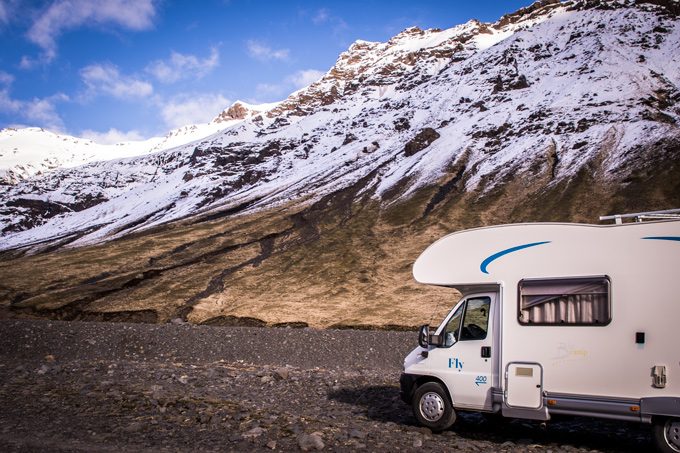
Most people planning a trip to Iceland face the same early decision: rent a car and book hotels, or go the campervan route and combine transport and accommodation into one. It sounds simple, but the choice shapes the entire experience, where you can go, how long you stay somewhere, and how much flexibility you actually have on the road.
Iceland’s road network, particularly the Ring Road, is well-suited to campervan travel. Campgrounds are spread across the country, distances between major sites are manageable, and the freedom to stop when something catches your eye is genuinely hard to replicate with a fixed hotel itinerary.
But “best way to see Iceland” is a loaded phrase. A campervan works well for some travelers and less well for others, depending on group size, budget, travel style, and the time of year. This article breaks down the real trade-offs, comparing a campervan approach against alternatives across the factors that actually matter, so you can decide whether it fits your trip before you commit.
Campervan vs. Rental Car and Hotels: The Flexibility Trade-Off
The most common comparison is a campervan against a rental car paired with hotel bookings. On paper, both get travelers around Iceland. In reality, they create very different trips.
With a campervan, transport and accommodation travel together. There’s no need to book a hotel weeks ahead or rush to check in by a set time. If the Northern Lights appear at midnight, pulling over is an option.
When travelers choose to rent a camper van in Iceland, most established providers, like Rent.is, include bedding, cooking equipment, and unlimited mileage as standard. That changes the cost comparison with hotels considerably, especially in peak summer when accommodation prices rise sharply.
The hotel-and-car setup has its benefits: a proper bed, a private bathroom, and no need to plan around campsite locations. However, it also requires committing to a fixed itinerary. Selecting a campervan means accepting less traditional comfort in return for greater freedom.
Where a Self-Drive Campervan Road Trip Beats a Guided Tour
Guided tours handle all the logistics. Someone else drives, and an expert explains what’s worth seeing. That works well for travelers who want a stress-free experience or aren’t comfortable driving in Iceland’s conditions.
A self drive Iceland campervan trip offers something a guided tour can’t: full control over the schedule. Travelers can leave at 2am to catch the aurora or spend three hours at a waterfall instead of thirty minutes. Photographers benefit most, with flexible departure times and the ability to return to a location at different light conditions.
The honest trade-off is effort. A self-guided campervan trip requires route planning, campsite research, and comfort with driving in changing weather. It’s not difficult, but it’s not passive either.
For travelers who prefer a hands-off approach or feel uncertain about driving in unfamiliar conditions, group tours remain a reliable option. The choice depends on how much control over timing and stops matters to the individual traveler.
When a Campervan Is the Wrong Choice
A campervan isn’t the right fit for every trip. Knowing when it doesn’t work is just as useful as knowing when it does.
Short trips of two or three days often don’t justify the setup. A hotel-and-car combination can be simpler and less expensive when only a small section of the country is being covered.
Large groups of five or more will likely find a compact campervan too cramped. A motorhome with more sleeping space and a proper bathroom is a better match for families or bigger groups.
Winter travel in a campervan Iceland road trip requires more preparation. Campervans can handle winter conditions, but heating becomes a real factor, campsite availability drops, and road conditions require more attention. Careful research on open campgrounds, as well as extra gear like thermal sleeping bags, is needed for safe and comfortable winter camping.
Travelers who prioritize consistent warmth and indoor facilities may find hotels a better winter option. The campervan route works, but it demands more from both the vehicle and the driver during colder months.
Ring Road vs. Highlands: How Your Route Affects the Right Vehicle
The planned route has a direct impact on which campervan can be legally driven.
The Ring Road is accessible to most campervans, including compact 2WD models. Campsites are well distributed along the route, and the road is paved for the majority of its length. A standard campervan handles this route without issue.
The Highlands are different. F-roads, the mountain tracks leading to places like Landmannalaugar and Þórsmörk, are legally restricted to 4×4 vehicles. This isn’t a suggestion, it’s a rule. Driving a standard 2WD campervan on an F-road is illegal and can result in fines, vehicle damage, and serious safety risks.
If Highland destinations are on the itinerary, the vehicle choice is decided by that fact alone. The Icelandic Road and Coastal Administration publishes current road classifications at road.is, which is worth checking before finalizing any Highland plans.
What a Campervan Actually Includes and What It Doesn’t
There’s often a gap between what travelers expect and what a rental actually covers. Learning this ahead of time helps with comparing the true cost against alternatives.
Most established Iceland campervan rental companies provide travelers with bedding, a basic cooking setup, utensils, and unlimited mileage included in the daily rate. Standard inclusions cover these basics, removing the need for travelers to bring their own gear or worry about hidden mileage surcharges.
However, the main point of difference remains the insurance add-ons and extra equipment. Gravel protection, sand and ash coverage, and GPS navigation are usually optional, not default. Clarifying the exact protection offered is especially important. Reviewing each company’s fleet details and confirming inclusions prior to payment ensures the final rental price matches expectations.
Campsite fees are not included in the rental. Iceland enforces regulated camping rules, and wild camping outside designated campsites is restricted. Campsite fees must be factored into the overall budget when comparing a campervan trip against hotel-based travel.
Time to Decide
A campervan is a strong choice for Iceland, but it’s not suitable for every traveler. It suits those who want flexibility, are comfortable planning their own route, and have at least several days to make the most of it.
For couples and small groups driving the Ring Road, it’s a convenient and satisfying option. Those setting out on shorter visits, organizing travel for large groups, or prioritizing fixed accommodation may find better results with other approaches. Taking the time to match vehicle type and travel format with itinerary allows travelers to experience Iceland’s scenery and freedom without unnecessary stress.

Comment 1
October 5, 2026 at 6:34 pm